

About
Señales de aliento/Vital Signs – Kimbra Smith
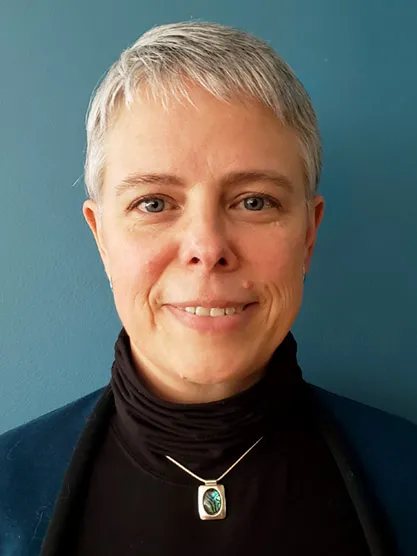
Dr. Kimbra Smith (PhD University of Chicago 2001; AB Princeton University 1992) is a cultural and applied anthropologist whose work crosses disciplinary boundaries. Her research looks at the complex processes of producing collective memory and developing strategies that enable communities to negotiate around and within oppressive political and economic systems. Smith’s interests include the anthropology of (local) knowledge and the production of authority; the interrelations of history, memory, representation, and power; and the implications of performance, constructions of interpracticality, and interpretive drift for practice theory.
Her theoretical work to date has considered the politics of cultural production and political uses of archaeology in the Andes; the production of racialized geographies in Ecuador; the politics of value and the concept of authenticity; and fluidity and the creation of fields of interactive practice as Indigenous methodologies of decolonization (see, for example, Practically Invisible: Coastal Ecuador, Tourism, and the Politics of Authenticity [2015, Vanderbilt University Press]). She has worked on the potential for applied community theatre to reveal shared experience and enhance empathy among participants from different backgrounds, using embodied practice to spark interpretive drift and reduce fear-based violence.
Dr. Smith is currently working on an ecological history of two valleys in southern Manabí, Ecuador, considering the interconnections of human and more-than-human history from the Spanish colonial period through the present. She is also developing digital humanities projects that ensure broader community access to and control over local histories (Revealing Invisible Histories of Colorado Springs; Agua Blanca and the Buenavista River Valley) and that better reflect the value of the liberal arts and sciences and their impact on quality of life (The City Interactive). She is also busy designing and co-creating multiple components for an interactive museum exhibition on the interconnectedness of rainforest ecologies.
As Director of the Heller Center for Arts & Humanities, Smith is organizing Dot Days: Our Place in Nature, a community-wide festival to be held in September 2026.
Teaching
- ANTH 2450 There’s Hope! Anthropological Approaches to the News
- ANTH 3400 Cultural Diversity in the United States
- ANTH 3430 Anthropological Approaches to Globalization
- ANTH 3970 History and Theory of Anthropology
- ANTH 4400/MSGP 4200 Community Curation as Engaged Anthropology